Why Bihar Bhuja Is Different from Regular Namkeen

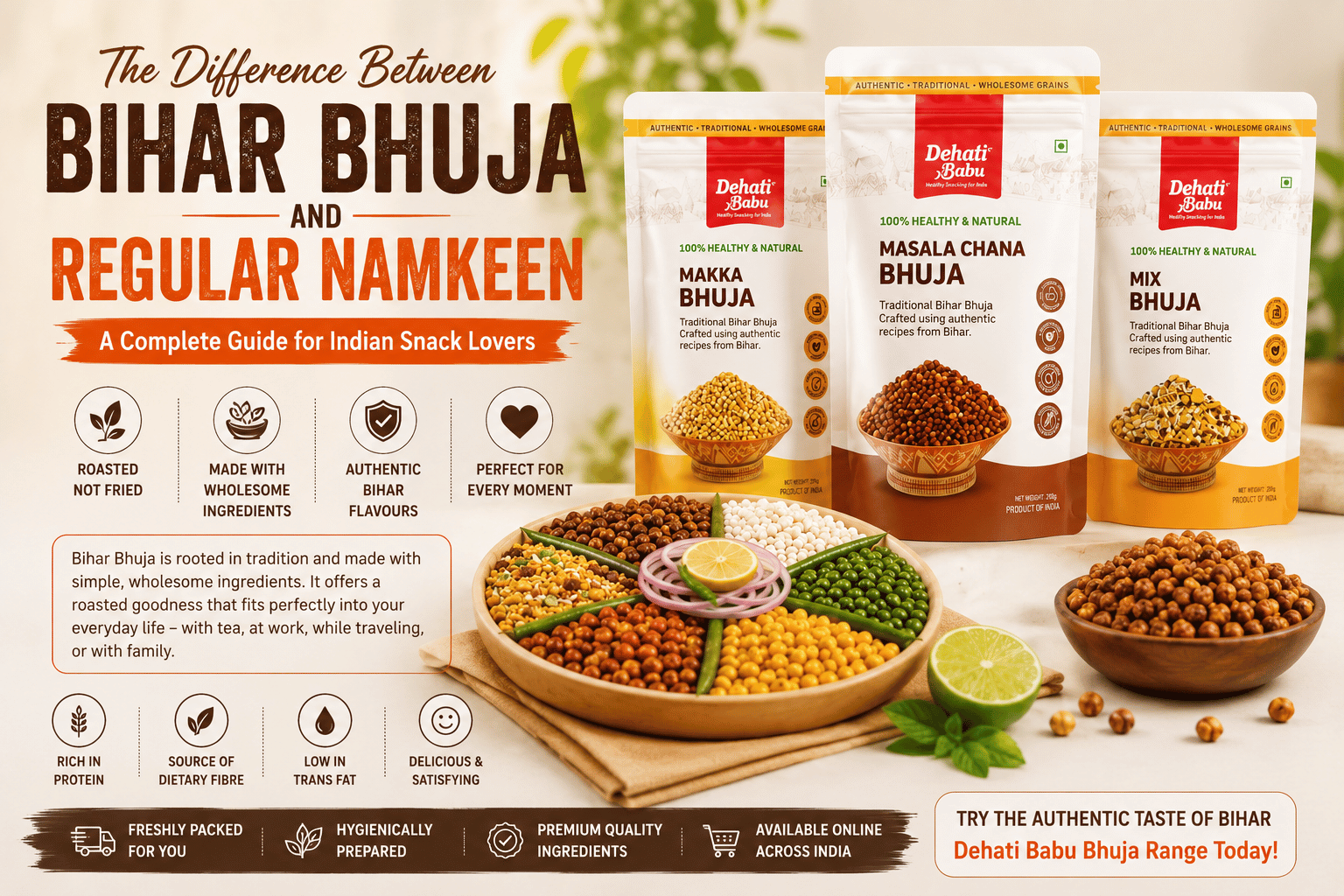
Bihar has a distinctive roasted-snack tradition that is deeply connected with everyday eating. Bhuja, or bhunja, is a good example of this food culture. Rather than being one fixed recipe, it describes roasted preparations made with familiar ingredients such as chana, corn, grains, puffed rice, peanuts, and other pulses or cereals. The Government of Bihar also describes bhunja as part of the state’s evening food culture, highlighting preparations including chana ka bhunja, makai ke lawa, mungphalli dana, and masaledar murhi. This regional connection is important because it shows that Bihar Bhuja is not simply a modern packaged-snack concept—it comes from a wider tradition of turning simple ingredients into enjoyable roasted foods.
That is also what makes Bihar Bhuja different from regular namkeen. Namkeen is a broad category that includes many types of savoury snacks, from sev and fried mixtures to dal-based snacks, nuts, and other seasoned preparations. Bhuja has a more specific connection with roasted ingredients and the character they develop during preparation. Instead of making seasoning, oil, or a complex mixture the entire focus of the snack, traditional Bhuja often allows the main ingredient to remain noticeable. The difference can be felt in the texture as much as the flavour: roasted chana has its own firm bite, roasted corn brings a distinctive crunch, and a mixed Bhuja can create contrast between several roasted ingredients in the same handful.
For someone accustomed to conventional packaged namkeen, that difference becomes easier to appreciate when the two are eaten side by side. A heavily seasoned namkeen may deliver an immediate, rich savoury taste, while Bhuja can feel more ingredient-led, dry, crisp, and roasted. This does not mean that every Bhuja is automatically healthier or that every namkeen is the same. Recipes vary, and packaged products can contain added oil, salt, spices, or other ingredients. The more useful distinction is the preparation style and eating experience. If you enjoy snacks where the roasted character of chana, corn, grains, or other ingredients remains part of the flavour, Bihar Bhuja offers something noticeably different from the conventional namkeen experience.
Bhuja Is a Roasted Food Tradition, Not Just Another Namkeen
To understand why Bihar Bhuja is different from regular namkeen, it helps to look beyond the packet and at the food tradition itself. Bhuja is closely associated with Bihar’s everyday snacking culture, where familiar ingredients such as chana, corn, beaten rice, puffed rice, peanuts, and grains are roasted and enjoyed in different combinations. The Government of Bihar describes bhunja as part of the state’s evening food culture, including preparations such as chana ka bhunja, makai ke lawa, mungphalli dana, and masaledar murhi. That regional connection gives Bhuja an identity that goes beyond being another savoury snack.
The biggest difference is the way roasting allows the main ingredient to remain noticeable. Roasted chana still has the firm, earthy character of chana, while roasted corn brings its own familiar flavour and crisp texture. A mixed Bhuja can combine several ingredients, creating variety without making everything taste the same. Regular namkeen has its own appeal, often built around frying, seasoning, sev, dal, boondi, nuts, or other savoury components. The point is not that one category is always better; they simply offer different eating experiences.
It is also important not to treat “roasted” as an automatic health claim. A roasted snack can still contain added oil, salt, spices, or other ingredients, and namkeen products vary widely too. For a sensible comparison, look at the actual ingredients, preparation method, nutrition information, seasoning, freshness, and serving size. If you enjoy bold, rich, heavily seasoned crunch, regular namkeen may suit you perfectly. If you prefer the flavour of roasted chana, corn, grains, or other familiar ingredients to remain at the centre, Bhuja provides an appealing alternative.
What makes Bihar Bhuja especially relevant today is its ability to bring traditional flavour into modern routines. It can sit beside evening chai, travel in a bag, stay ready in an office pantry, or be shared during family time without complicated preparation. Modern packaging has made these regional flavours easier to enjoy outside Bihar, but the basic appeal remains rooted in the same idea: simple ingredients, roasting, satisfying texture, and a strong connection with local food culture. Bhuja does not need to replace namkeen—it simply gives Indian snack lovers another tradition to enjoy.
Bihar Bhuja vs Regular Namkeen: What Changes in the Bowl?
The difference becomes much easier to appreciate when you look at what is actually in the bowl rather than simply comparing the names on the packet. A regular namkeen mixture may bring together fried sev, boondi, dal, peanuts, flour-based ingredients, and bold seasoning, creating the rich crunch that has made namkeen a familiar part of Indian snacking. Bihar Bhuja starts from a different idea: roasted ingredients remain an important part of the flavour and texture. Roasted chana has its own firm bite and earthy roasted character, Makka Bhuja allows the flavour of corn to stand out, while a mixed Bhuja can bring several ingredients together so that different textures appear throughout the snack. This ingredient-led experience is one of the simplest ways to understand why Bhuja feels different from conventional namkeen.
The difference becomes even more noticeable when you consider how the flavour develops while eating. A strongly seasoned namkeen can deliver a powerful combination of spice, salt, richness, and crunch almost immediately. With Bhuja, the roasted ingredient can remain more recognisable, allowing you to notice the difference between chana, corn, grains, peanuts, or other components in a mixture. That does not mean Bhuja needs to be bland or lightly seasoned. Masala preparations can still have a distinctive savoury character; the difference is that the seasoning works with the roasted ingredients rather than being the only thing that defines the snack. For consumers who enjoy discovering different textures and familiar ingredients in a simpler format, this can make Bhuja a refreshing alternative.
| What You Notice | Bihar Bhuja | Regular Namkeen |
|---|---|---|
| Core idea | Roasted regional snack tradition | Broad category of Indian savoury snacks |
| Preparation | Often centred around roasting | Many varieties rely on frying, although methods vary |
| Main ingredients | Chana, corn, grains, puffed rice, pulses and other roasted ingredients | Sev, dal, boondi, flour-based snacks, nuts and mixed ingredients |
| Texture | Often dry, crisp and ingredient-specific | Can be rich, intensely crisp and varied |
| Flavour | Roasted ingredients can remain noticeable | Frying and seasoning may have a stronger influence |
| Regional character | Strong connection with Bihar’s food culture | Many regional styles exist across India |
| Everyday use | Tea time, travel, office breaks and family snacking | Tea time, gatherings, celebrations and casual snacking |
The comparison should not be treated as a simple contest where one category is automatically better than the other. Namkeen is an extremely broad category, and individual products can differ greatly in their ingredients, preparation, seasoning, and nutritional profile. The same principle applies to Bhuja. A packaged roasted snack can still contain added oil, salt, or spices, so the word “roasted” should not be treated as a blanket health claim. When choosing between the two, it makes more sense to consider the actual product, including its ingredients, preparation, nutrition information, freshness, seasoning, and serving size. If you enjoy the richer, more intense character of traditional namkeen, there is no reason to abandon it; if you prefer the flavour of roasted chana, corn, grains, or mixed roasted ingredients, Bhuja offers another style of snacking worth trying.
For shoppers discovering Bihar Bhuja for the first time, choosing according to the ingredient you already enjoy can make the decision much easier. Someone who likes roasted corn may naturally prefer Makka Bhuja, while a person who enjoys the familiar crunch of chana may prefer a masala chana preparation. Those who like several textures in the same handful may find a mixed Bhuja more interesting. This is also what makes the category useful for different occasions: the same roasted snack can work beside evening chai, during an office break, on a road trip, or as something to share with family.
Ultimately, Bihar Bhuja and regular namkeen offer two different ways to enjoy Indian savoury snacks. Namkeen is valued for its enormous variety of fried and seasoned combinations, while Bhuja brings roasted ingredients, regional identity, and an ingredient-focused eating experience to the table. Once that distinction is clear, Bhuja becomes easier to appreciate for what it actually is—not a replacement that needs to defeat namkeen, but a traditional Bihar-inspired snack with its own flavour, texture, and place in modern Indian snacking.
Why the Ingredient Matters More in Bhuja
One of the easiest ways to understand the appeal of Bhuja is to look at the ingredients rather than treating the snack as one uniform mixture. In a good roasted preparation, each ingredient can contribute something of its own. Roasted chana brings a firm, satisfying bite and a naturally earthy flavour, while roasted corn has a different aroma and crunch. Puffed or flattened grains can make the texture lighter, while peanuts, peas, and other additions can introduce another layer of contrast. When these ingredients are combined thoughtfully, the snack can remain interesting without depending entirely on heavy seasoning.
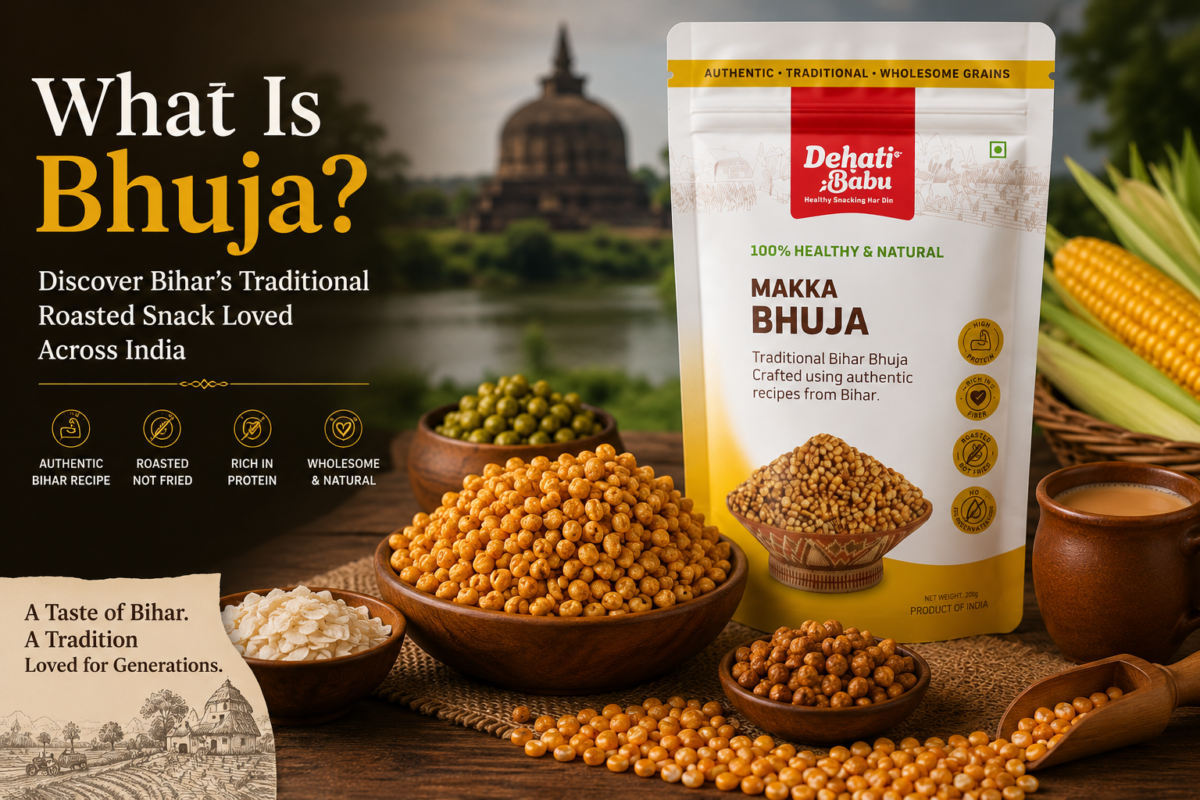
This ingredient-led character is also what makes Bhuja so easy to fit into everyday life. The same roasted preparation can be enjoyed alongside chai in the evening, kept ready for an office break, packed for a journey, or placed on the table when family members are sharing snacks. There is no need for elaborate serving or preparation, which makes the traditional idea particularly well suited to modern routines. For someone discovering Bihar’s roasted-snack culture for the first time, What Is Bhuja? offers useful background on the ingredients, preparation, and regional food tradition behind it.
The wider appeal of Bhuja comes from this simple combination of recognisable ingredients, roasting, regional character, and convenience. A person who has never visited Bihar can discover these flavours through a ready-to-eat product, while someone familiar with the tradition can enjoy the same style of snacking away from home. That is what gives Bhuja lasting relevance: it does not need to become complicated or heavily reinvented to fit modern life. Its strength is in taking familiar ingredients and presenting them in a way that remains practical, enjoyable, and connected to where the food comes from.
What This Means for Modern Snack Buyers
Today’s snack buyer has more choice than ever. Walk into a supermarket or browse an online store and you can quickly find dozens of savoury snacks competing for attention, often with colourful packaging, bold flavour names, and similar promises of crunch and convenience. That makes it harder to judge a product simply by looking at the packet. When comparing Bihar Bhuja with regular namkeen, understanding the ingredients and preparation gives you a much clearer idea of what you are actually choosing.
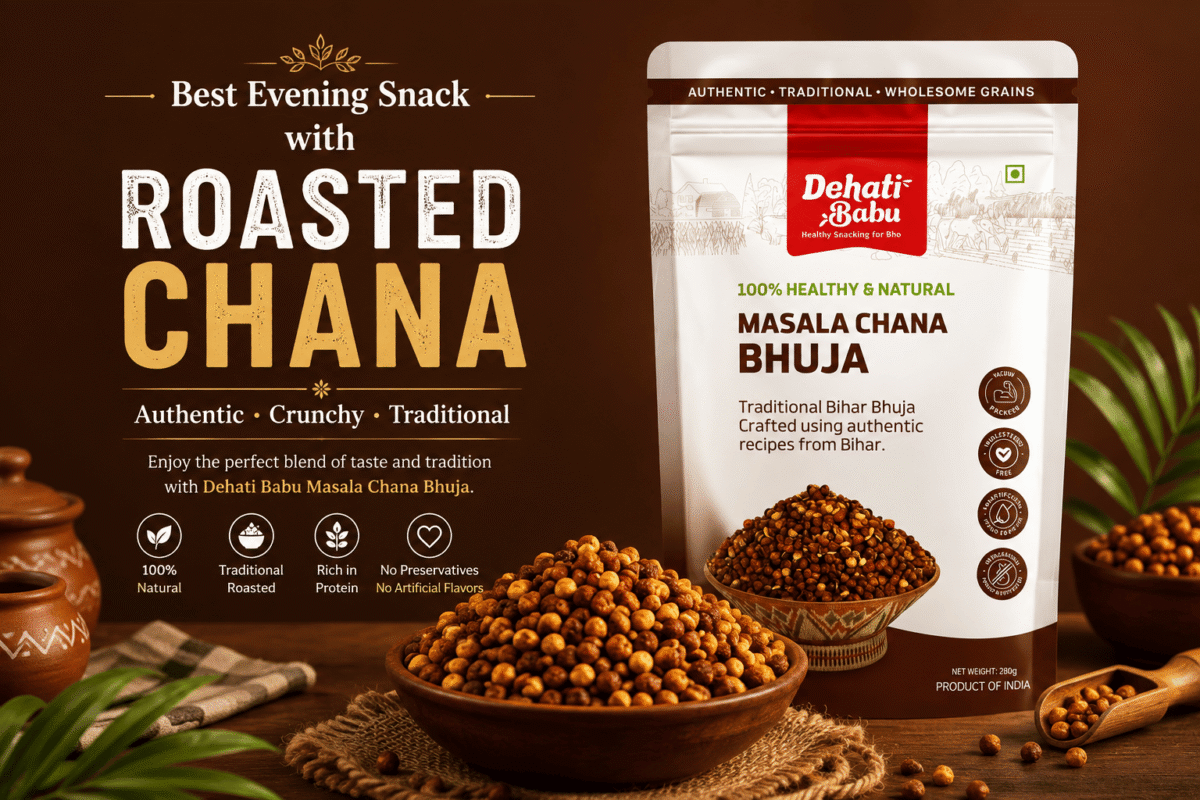
Instead of asking which snack is automatically “better,” think about the kind of eating experience you prefer. If you enjoy the natural character of roasted chana, corn, grains, or other familiar ingredients, Bhuja may offer the style of snack you are looking for. If you prefer a richer, more intensely seasoned crunch, traditional namkeen may be a better match. It is also worth considering how you plan to eat the snack—whether it is for evening chai, an office break, travel, family sharing, or simply keeping something convenient in the pantry. If roasted chana is already one of your favourites, you can also see how it fits into everyday snacking in our guide to the Best Evening Snack with Roasted Chana.
When comparing products, a few practical questions can make the decision easier:
- Do you enjoy the flavour and texture created by roasting?
- Would you rather taste the main ingredient clearly instead of having it dominated by seasoning?
- Are you looking for a convenient snack for tea time, work, travel, or casual eating?
- Do you prefer the dry crunch of roasted ingredients or the richer texture of fried snacks?
- Does the product provide clear information about ingredients, nutrition, preparation, and storage?
- Are you interested in discovering a regional Indian snack with a connection to Bihar’s food culture?
These questions encourage a more sensible buying decision than simply choosing the packet with the most attractive claim. A snack can be appealing because of its flavour, preparation, freshness, regional character, or convenience, and different buyers will naturally give different importance to each of these qualities. Checking the actual product information also helps avoid assuming that a particular preparation method automatically tells you everything about its nutritional value. For readers comparing roasted and fried options more closely, our guide on Why Roasted Snacks Are Better Than Fried Namkeen provides further context.
For Bihar Bhuja, the real appeal is that it offers another way to enjoy Indian savoury snacks. It does not need to compete with namkeen by copying its flavours or trying to become something else. Its character comes from roasted ingredients, familiar grains and legumes, regional preparation, and a style of snacking that has remained connected to everyday life in Bihar. Modern packaged versions simply make that tradition easier to enjoy at home, during tea time, at work, while travelling, or whenever you want a different kind of crunchy snack.
Understanding the Real Difference Between Bihar Bhuja and Namkeen
The difference between Bihar Bhuja and regular namkeen becomes much easier to appreciate when you look beyond the packet and focus on what you actually experience while eating it. Namkeen is a broad category of Indian savoury snacks, and many popular varieties are known for bold seasoning, rich crunch, fried textures, and combinations of ingredients such as sev, dal, boondi, peanuts, or flour-based components. Bhuja begins from a different idea. Its character is built around roasted ingredients, allowing foods such as chana, corn, grains, puffed rice, peanuts, and other familiar ingredients to contribute their own flavour and texture. The result does not need to compete with namkeen by being stronger or more heavily seasoned; its appeal comes from being able to recognise what you are eating.
That difference becomes particularly noticeable in the texture. Roasted chana has a firm, dry crunch, while roasted corn brings its own crispness and aroma. When several roasted ingredients are combined, the experience can become even more interesting because each component contributes something different. This is quite different from a heavily seasoned namkeen where the overall flavour may be dominated by the same combination of spice, salt, and richness throughout the packet. Neither style is automatically better, because personal taste always matters, but Bhuja gives people another kind of savoury snack to choose when they want the roasted ingredient itself to remain part of the experience.
The ingredients are also a major part of Bhuja’s identity. Chana, corn, grains, puffed rice, peanuts, and peas are all familiar foods, but roasting gives them a different character and makes them suitable for combinations that can be enjoyed in several ways. Someone who enjoys the straightforward taste of roasted chana may prefer a chana-based preparation, while a corn lover may naturally choose Makka Bhuja. A mixed preparation offers something different again, bringing several textures together for people who do not want every handful to taste exactly the same. This variety is one reason Bhuja works well across everyday occasions, from evening chai and office breaks to family snacking and travel.
It is also worth keeping the health comparison realistic. “Roasted” should not automatically be treated as a health claim. A packaged Bhuja product can still contain added oil, salt, spices, or other ingredients, just as different namkeen products can have very different recipes and nutritional profiles. When choosing a snack for regular consumption, it is more useful to check the actual ingredients, preparation details, nutrition information, freshness, seasoning, and serving size. For readers who want to compare Bihar-inspired products more closely, Best Traditional Bihar Bhuja Brand in India provides a natural next step for understanding the qualities that can matter when choosing a packaged Bhuja.
Ultimately, the real difference is not simply roasted versus fried. It is the relationship between the ingredient, preparation, flavour, texture, and the occasion in which the snack is enjoyed. Regular namkeen offers an enormous range of rich and strongly seasoned combinations, while Bihar Bhuja brings a roasted, ingredient-focused tradition with a clear regional identity. Once that distinction is understood, Bhuja becomes easier to appreciate on its own terms—not as a replacement that needs to defeat namkeen, but as a traditional Bihar-inspired snack that offers Indian snack lovers a different and genuinely enjoyable experience.
Bhuja Is More Than One Flavour
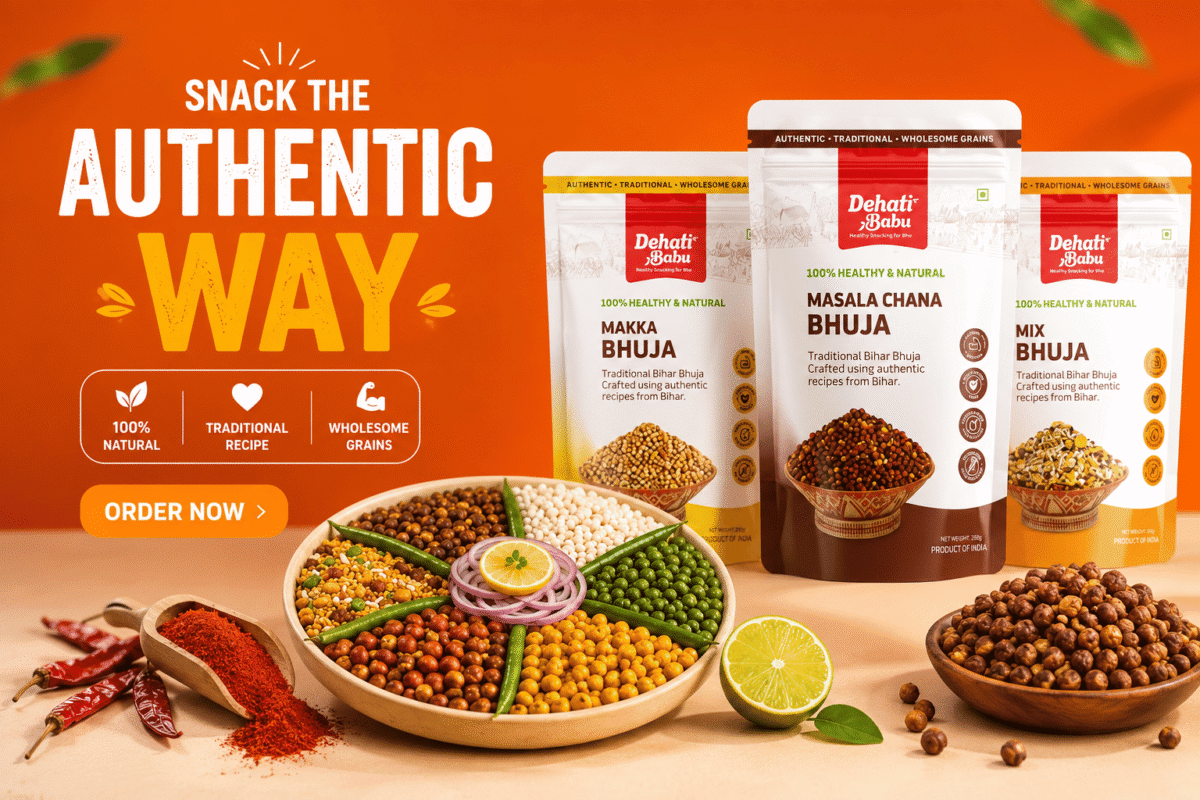
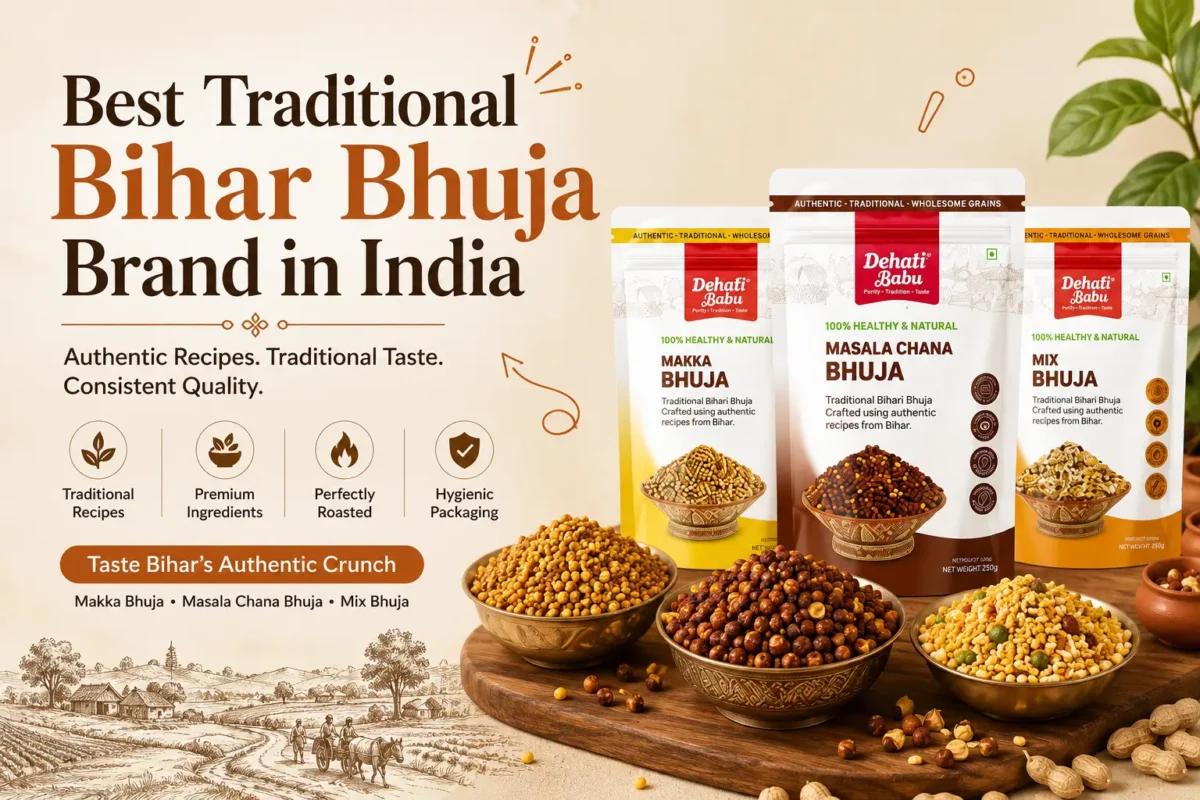
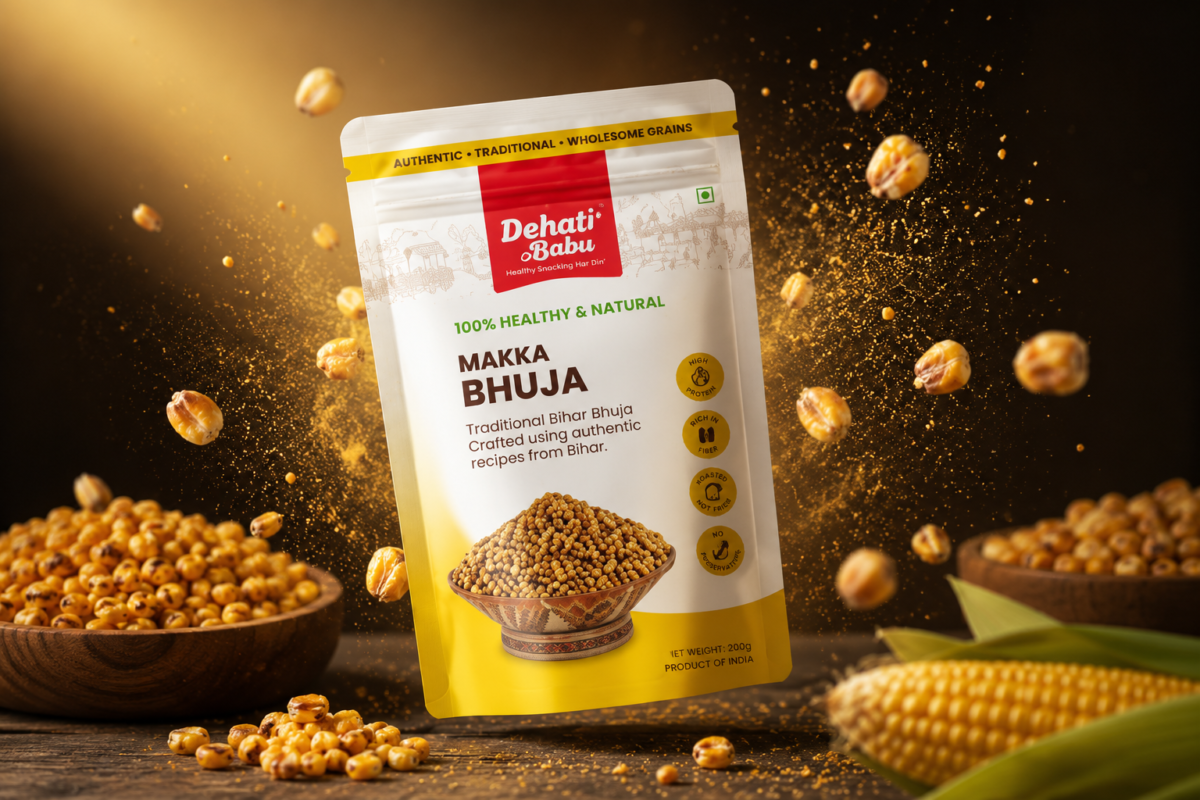
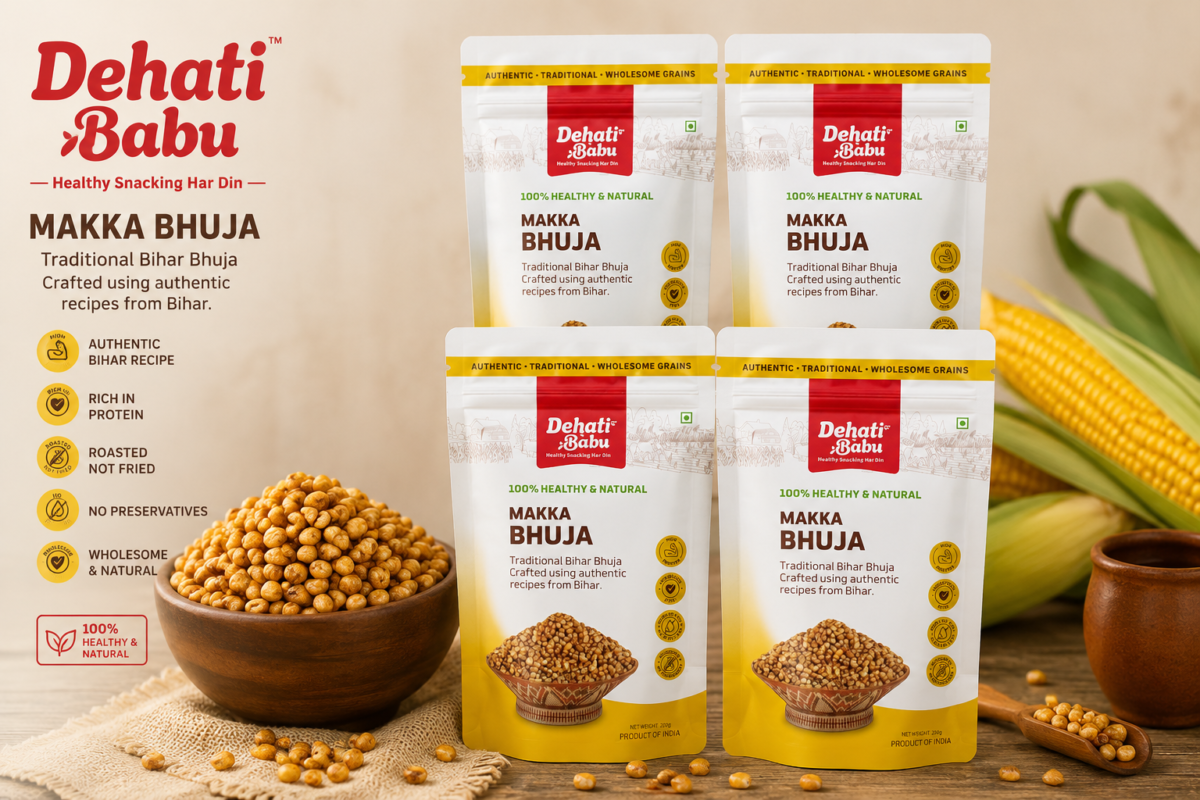
One common misunderstanding is treating Bhuja as though it refers to one specific snack with one fixed recipe. In reality, the category can include different roasted ingredients, combinations, and seasoning styles, which is one reason it remains interesting for everyday snackers. Makka Bhuja places roasted corn at the centre, giving the snack its distinctive corn flavour and crisp texture. Masala Chana Bhuja takes roasted chana in a more savoury direction, while Mix Bhuja brings several roasted ingredients together for people who enjoy greater variety in the same serving. Each option has its own character, so choosing between them can be more about personal taste than finding one universally “best” Bhuja.
This variety also makes Bhuja practical for different people and occasions. Someone who prefers a straightforward roasted ingredient may naturally reach for chana, while a corn lover may find Makka Bhuja more appealing. A mixed preparation can work particularly well when sharing with family or when you want several textures without keeping many different snacks open at the same time. For anyone specifically interested in roasted corn, Best Makka Bhuja Online in India can help when comparing the qualities that matter in a packaged product, including ingredients, preparation, freshness, packaging, and flavour.
The wider variety also shows why Bhuja is better understood as a roasted-snack tradition rather than a single recipe. The ingredients can change, the seasoning can change, and the balance of textures can change, but the roasted character remains an important part of the experience. That gives consumers more room to discover a preparation that suits them instead of assuming that every Bhuja should taste the same. It also allows traditional Bihar-inspired snacking to fit naturally into modern preferences, whether someone wants a simple roasted snack, a masala-style option, or a combination with several ingredients.
Why Bhuja Can Feel Less Like Conventional Namkeen
The difference between Bhuja and conventional namkeen is not only something you can notice in the ingredient list; it can also change the way the snack feels while you are eating it. Many familiar namkeen products are designed around an immediate combination of crunch, seasoning, salt, spice, and richness, so the overall flavour can arrive quickly and remain consistent from one bite to the next. Bhuja can create a different experience because the roasted ingredients are more noticeable. You may taste the character of the chana, recognise the roasted corn, or notice how different ingredients in a mixture contrast with one another instead of experiencing one dominant flavour throughout.
That does not mean Bhuja needs to be bland or lightly seasoned. A masala preparation can have plenty of flavour, but the seasoning can work alongside the roasted ingredient rather than completely defining it. This can be particularly appealing to people who have become accustomed to strongly flavoured snacks and want something with a more recognisable ingredient character. The difference is subtle but important: instead of the seasoning being the main reason to eat the snack, the roasted ingredient and its texture remain part of the reason you enjoy it.
This ingredient-focused experience also helps Bhuja adapt to more everyday situations. It can be served with chai, kept ready for an afternoon office break, packed for a train or road journey, or placed on the table when family members want something savoury to share. Because it does not depend on a particular meal or elaborate preparation, it fits easily into routines that change from day to day. That combination of familiar ingredients, roasted texture, regional identity, and convenience is what allows Bihar Bhuja to feel different from conventional namkeen while still remaining recognisable as an Indian savoury snack.
Is Bihar Bhuja Healthier Than Regular Namkeen?
It is tempting to make a simple claim that Bhuja is healthier than regular namkeen because Bhuja is associated with roasting, but that would not give readers a reliable picture. Roasted does not automatically mean healthy, and fried does not tell you the complete nutritional value of a product either. A packaged Bhuja may contain added oil, salt, spices, or other ingredients, while namkeen products can vary significantly in their recipes and preparation methods. The more useful comparison is to look at the actual product in front of you and understand what it contains, how it has been prepared, and how it fits into your overall eating habits.
For someone choosing a snack for regular tea time, office breaks, travel, or casual eating, the ingredient list is a better starting point than the marketing language on the front of the packet. Look at the main ingredients first, then consider whether additional oil, salt, seasoning, or other components are included. Nutrition information can help you make a more informed comparison, particularly when you are deciding between different products in the same category. Portion size matters as well, because even a snack made with familiar ingredients can contribute differently to your overall diet depending on how much you eat and how frequently you choose it.
Freshness and preparation also deserve attention, especially with roasted snacks. The appeal of Bhuja comes partly from its roasted aroma and crisp texture, so packaging and storage can have a noticeable effect on the experience. Before buying, consider the ingredients, preparation method, nutrition information, seasoning, pack size, freshness, and storage instructions. If you are shopping online, clear product information is particularly valuable because you cannot examine the packet yourself before ordering. These details allow you to compare products based on what is actually inside rather than assuming that one preparation label tells the whole story.
The same approach applies when comparing Bhuja with regular namkeen. If you enjoy the rich, heavily seasoned character of a particular namkeen, its appeal may be perfectly suited to your taste. If you prefer roasted chana, corn, grains, or other ingredients where the original food remains more noticeable, Bhuja may offer a style of snacking that you find more satisfying. The decision does not have to be about completely replacing one category with another. It can simply be about having more informed choices and selecting snacks that suit your preferences, routine, and dietary needs.
For buyers exploring Bihar-inspired Bhuja, this is also where product quality becomes important. A traditional idea deserves a product that communicates its ingredients clearly, maintains the expected roasted texture, and provides useful information before purchase. Rather than relying on the word “healthy” alone, take a closer look at what you are buying. That makes the choice more practical and gives you a better chance of finding a Bhuja that delivers the flavour, freshness, and convenience you actually want from an everyday snack.
What Makes a Good Packaged Bihar Bhuja?
Traditional character may be what first attracts someone to Bihar Bhuja, but the quality of the packaged product is what determines whether they enjoy it enough to buy again. A good Bhuja should deliver the experience people expect from a roasted snack: a pleasant roasted aroma, a satisfying texture, balanced seasoning, and freshness when the packet is opened. Even a product with an interesting regional story can disappoint if it arrives soft, stale, poorly packed, or so heavily seasoned that the main ingredients become difficult to appreciate. For that reason, it is better to judge a packaged Bhuja as a complete product rather than focusing on one attractive claim or a photograph on the packet.
When buying online, the ingredient and product information deserves particular attention because you cannot taste or inspect the snack before placing an order. Look at what ingredients are listed, how the product is described, what preparation method is used, and what nutrition information is provided. Packaging is equally important for a dry roasted snack because exposure to moisture can affect the crisp texture that makes Bhuja enjoyable. Seasoning should also suit your preference; stronger flavour is not automatically better if it completely covers the character of chana, corn, grains, or other roasted ingredients. Pack size and storage guidance matter too, especially if you are buying for a family, office, travel, or regular tea-time use.
A practical checklist is therefore more useful than simply asking whether a packet looks premium:
- Ingredients: Check what the snack is actually made from.
- Preparation: Understand how the roasted character is developed.
- Freshness: Look for clear product and pack information.
- Seasoning: Choose a flavour profile that complements the main ingredients.
- Packaging: Good packaging should help protect texture during storage and delivery.
- Nutrition information: Use the actual product information rather than broad marketing claims.
- Pack size: Choose an amount that suits your household and eating occasion.
- Storage: Follow the recommended instructions after opening.
These details matter because Bhuja is ultimately an eating experience, not just a regional label. The crunch should feel right, the seasoning should make the ingredients more enjoyable, and the product should arrive in a condition that matches what the buyer expected. When those basics are handled well, the traditional character of Bihar-inspired Bhuja becomes much easier to appreciate.
Why Dehati Babu Fits This Modern Bhuja Category
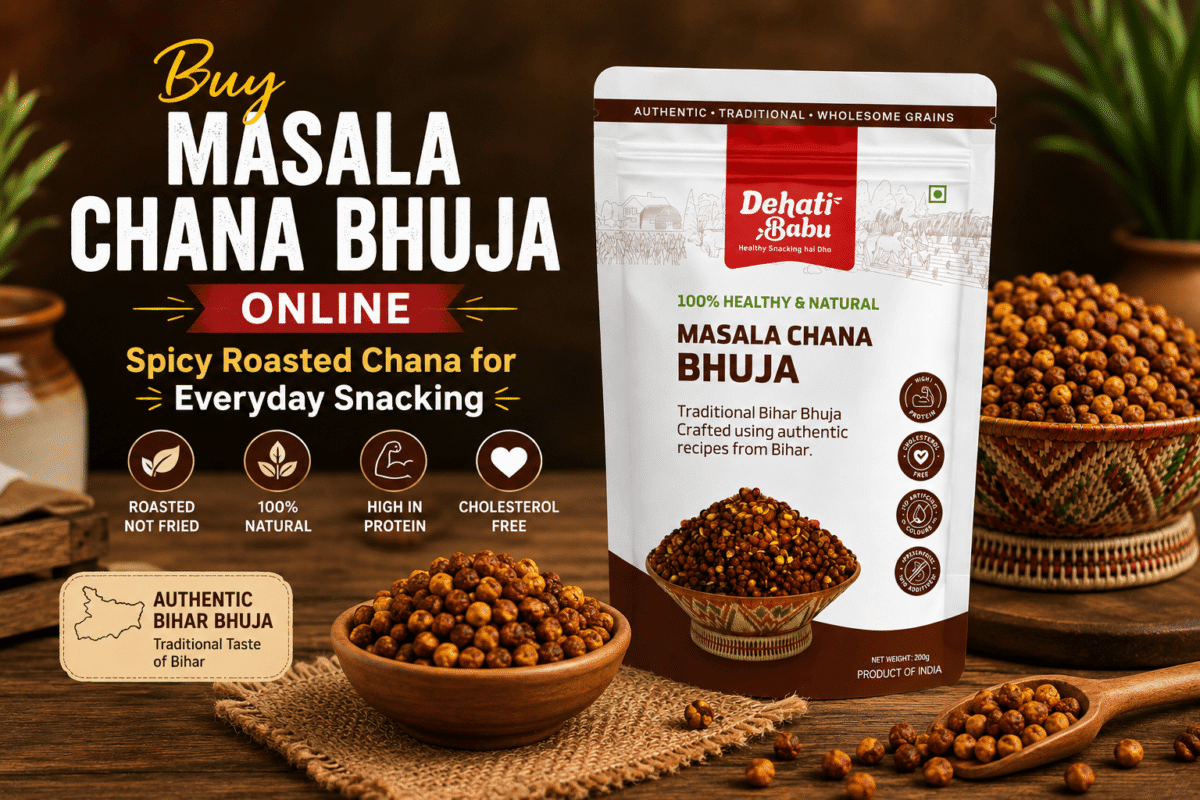
For consumers looking specifically for Bihar-inspired roasted snacks, Dehati Babu brings the traditional Bhuja idea into a convenient packaged format with options including Masala Chana Bhuja, Makka Bhuja, and Mix Bhuja. The range gives different preferences their own place rather than expecting everyone to enjoy the same flavour. Someone who likes the firm crunch and savoury character of chana can choose Masala Chana Bhuja, while someone who prefers roasted corn can go for Makka Bhuja. Mix Bhuja provides another experience for those who enjoy several roasted ingredients and textures together.
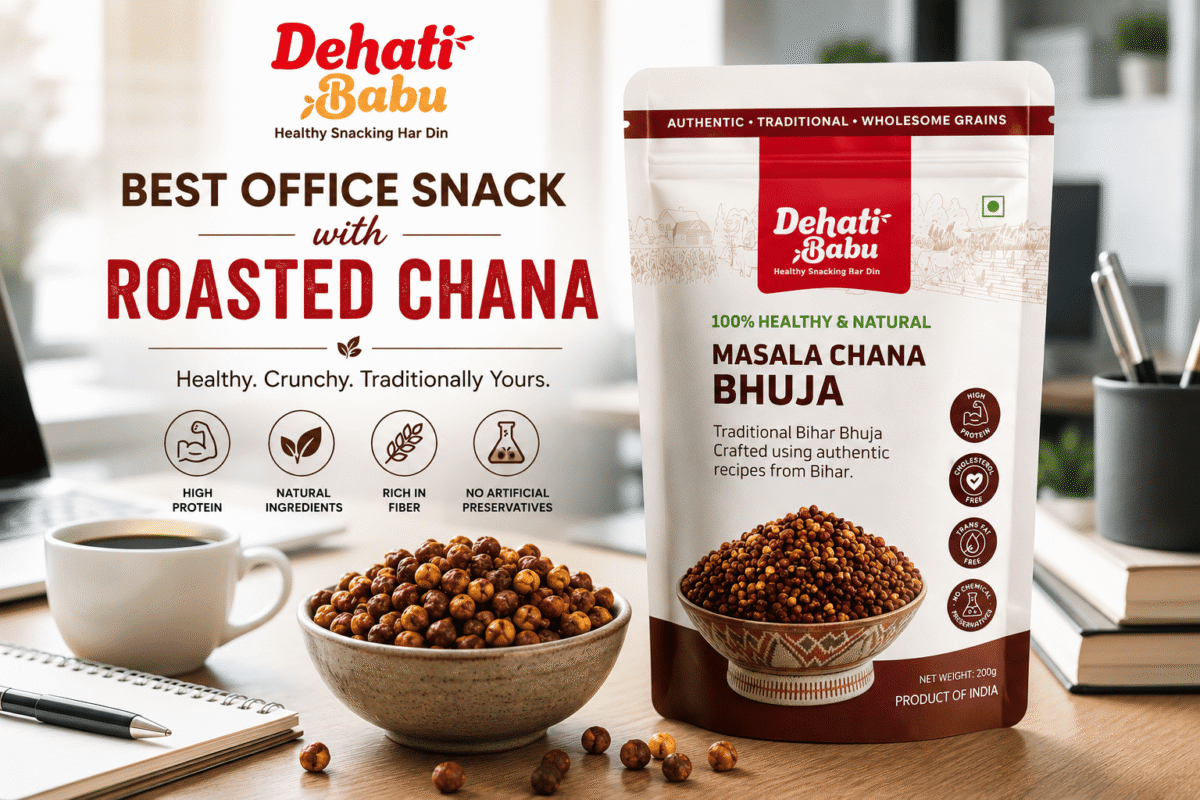
That variety also makes the products easier to fit into real everyday routines. A packet can be kept ready for evening chai, placed in an office pantry for an afternoon break, packed before a train or road journey, or served when family members want something savoury to share. The convenience comes from the ready-to-eat format, while the regional identity comes from the Bihar-inspired roasted-snack tradition behind the products. This combination is important because modern consumers often want food that fits their schedules without losing the familiar flavours that make it enjoyable.
The purpose, therefore, is not simply to create another packet of namkeen. It is to make Bihar’s roasted-snack character easier to enjoy in modern homes and routines. For a buyer, that means the product should work on two levels: it should be convenient enough for contemporary life while still giving the roasted ingredients, flavour, and regional identity enough space to remain part of the experience. When those elements come together, Bhuja becomes more than a convenient snack—it becomes a practical way to enjoy a distinctive Bihar-inspired food tradition.
Frequently Asked Questions
What is the main difference between Bihar Bhuja and regular namkeen?
Bihar Bhuja is closely connected with a roasted-snack tradition built around ingredients such as chana, corn, grains, puffed rice, peanuts, and other familiar foods. Regular namkeen is a much broader category that includes fried, roasted, seasoned, and mixed savoury preparations. The difference is therefore not simply about taste; it also involves preparation, ingredients, texture, and Bihar’s regional food culture.
Is Bihar Bhuja always made through roasting?
Bhuja is strongly associated with roasting, particularly in traditional Bihar preparations, but modern products can use different recipes and preparation details. If you are buying packaged Bhuja, check the product description and ingredient information to understand how that particular product is prepared rather than assuming every product follows exactly the same method.
Is Bihar Bhuja healthier than regular namkeen?
Not automatically. A roasted snack can still contain added oil, salt, spices, or other ingredients, while namkeen products can vary significantly in their recipes and nutritional profiles. If health and nutrition are important to you, compare the actual ingredient list, nutrition information, serving size, and preparation method instead of judging a product only by the word “roasted.”
What are the most popular types of Bihar Bhuja?
Different varieties offer different eating experiences. Masala Chana Bhuja suits people who enjoy the firm crunch of roasted chana with savoury seasoning, Makka Bhuja is suited to those who enjoy the distinctive character of roasted corn, and Mix Bhuja brings several roasted ingredients together for greater variety in texture and flavour.
Why is Bhuja becoming popular outside Bihar?
Bhuja combines regional food identity with a format that fits modern snacking habits. Familiar ingredients, roasted preparation, ready-to-eat convenience, and easy packaging make it practical for consumers in different parts of India. Online shopping has also made it easier for people to discover regional foods that may not traditionally have been available in their local markets.
Can Bihar Bhuja be enjoyed during tea time?
Yes. Bhuja works naturally as a tea-time snack because it can be served directly without cooking or complicated preparation. The roasted texture and savoury flavour can provide an alternative to biscuits, chips, or conventional namkeen, while different varieties allow you to choose between simpler roasted flavours and more seasoned options.
What should I look for when buying Bihar Bhuja online?
Start with the information that tells you what you are actually buying. Check the ingredients, preparation method, nutrition information, seasoning, pack size, freshness, packaging, and storage instructions. If you are ordering online, also consider the product description and delivery details. A clear product listing makes it easier to compare options instead of choosing only from photographs or promotional claims.
Which is better for me: Masala Chana Bhuja, Makka Bhuja, or Mix Bhuja?
There is no single option that is best for everyone. Choose Masala Chana Bhuja if you enjoy roasted chana and a savoury masala profile, Makka Bhuja if roasted corn is more appealing to you, or Mix Bhuja if you prefer several ingredients and textures together. Your personal taste, snacking occasion, and preferred texture are better guides than simply choosing the most popular variety.
Final Thoughts
The difference between Bihar Bhuja and regular namkeen goes beyond simply comparing roasted and fried snacks. It is about the ingredients, preparation, texture, flavour, and regional food culture behind each one. Namkeen offers an enormous variety of rich and strongly seasoned combinations, while Bhuja gives roasted chana, corn, grains, pulses, and other familiar ingredients more room to remain part of the eating experience. That makes Bhuja an interesting choice for people who enjoy traditional ingredients and a different kind of crunch.
What makes Bihar Bhuja especially relevant today is how naturally it fits modern routines without losing its regional character. It can be enjoyed with evening chai, kept ready for an office break, packed for travel, served during family gatherings, or simply stored in the pantry for everyday snacking. Dehati Babu’s Masala Chana Bhuja, Makka Bhuja, and Mix Bhuja offer different flavour and texture experiences, so buyers can choose according to what they genuinely enjoy rather than expecting one variety to suit everyone.
Ultimately, Bhuja does not need to replace namkeen to deserve a place in the modern snack market. Its strength is its own identity: roasted ingredients, familiar flavours, regional character, and everyday convenience. For anyone discovering Bihar-inspired snacks, choosing a good Bhuja is less about following a trend and more about finding a product that delivers the taste, freshness, texture, and convenience they want. When those things come together, Bhuja becomes more than a different type of namkeen—it becomes a traditional snack worth making part of your own routine.